
Daokong GongSTANDING PRACTICE中文
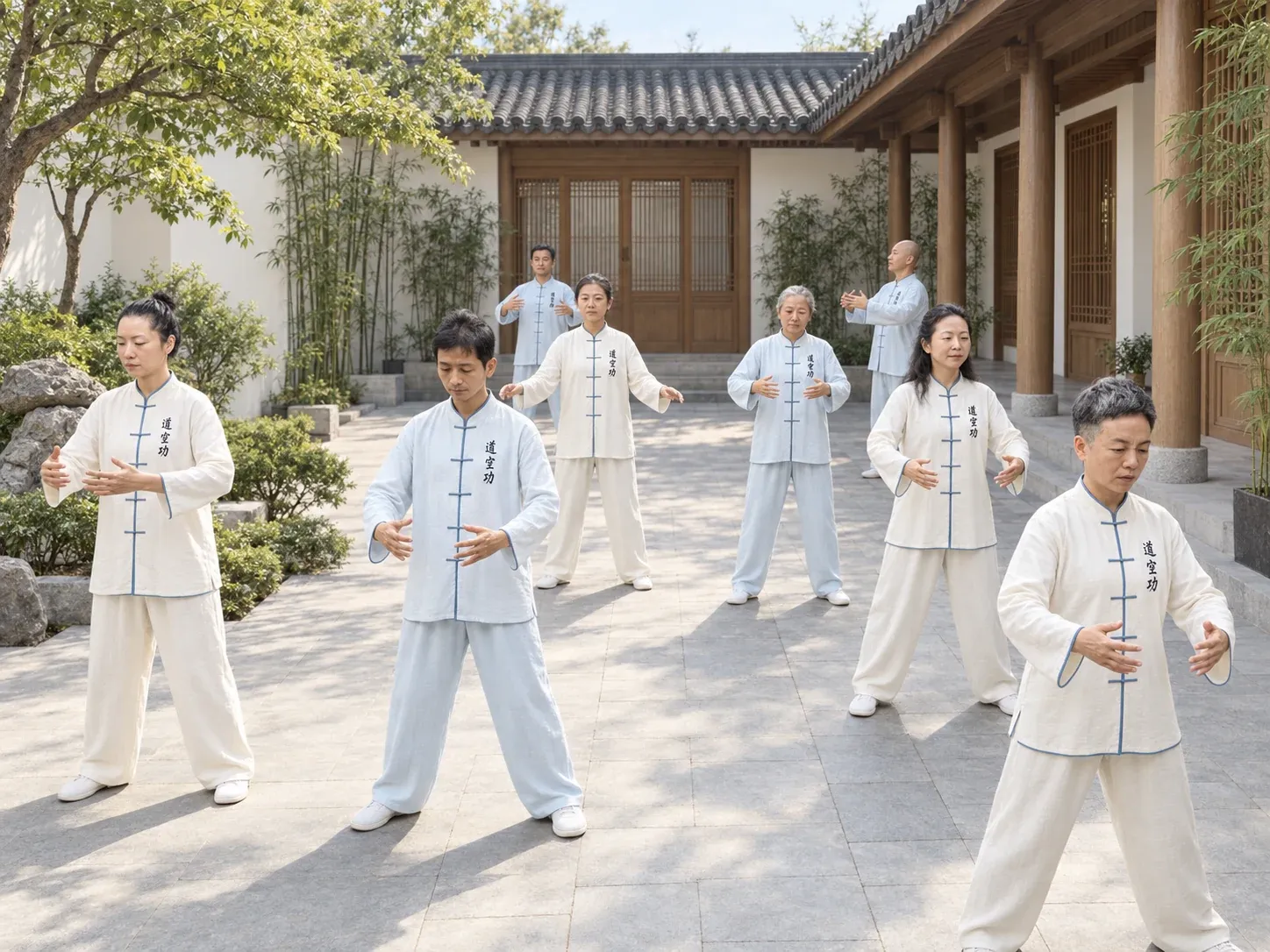
Practicing together

Practice & wellbeing

Find the balance
between effort and ease.

Stay supported. Notice unnecessary tension. Explore an approach to wellbeing that starts with how you actually feel.

Start exploring
DAOKONG GONG · EVERYDAY PRACTICEPracticing together

What would you like to explore?

Start with a question that matters to you.

See all topics

01 / Practice & Wellbeing

Effort and ease, together

Do what the posture needs. Let the extra effort go.

Standing practice

Hold your hands lightly in front of your abdomen. Some muscles need to work. But does your jaw need to clench? Do your shoulders need to rise? Does your breathing need to pause?

This is a concrete way to approach Wang Xiangzhai’s teaching about rest within exercise and exercise within rest. You keep the activity that supports the posture while allowing unnecessary tension to ease.

“Rest” here does not mean standing requires less effort than lying down, or that practice can replace sleep. It means finding opportunities to stop overworking within an activity.

Check in after your session. Do you still have energy for the rest of your day, or have you pushed too hard? That response helps you decide what to do next time.

02 / Practice & Wellbeing

Notice how body and mind respond together

Start with what you can actually observe

Standing practice

You may notice your jaw tighten when you worry, your shoulders rise when you rush, or your breath pause when you concentrate. These everyday habits give us a useful place to begin.

During standing practice, take time to notice them. Make a small adjustment if your shoulders tense. If your attention wanders, gently come back. You do not need to suppress your thoughts or redesign your breathing.

Traditional yangsheng writings connect a settled mind, natural breathing, muscular relaxation, the movement of qi and blood, and the nourishment of the organs. That is a traditional account of how the whole person functions. It should not be presented as a medically proven chain of cause and effect.

You do not have to feel calm on schedule. A busy mind does not make the session a failure. Noticing what is happening is already part of the practice.

03 / Practice & Wellbeing

Song | Release tension. Nurture body and mind.

Ease through the muscles and joints, with care for the whole person

Learning through individual guidance

Let unnecessary tension ease through your muscles and joints, from your shoulders and back to your hips and limbs. Keep the support you need to stand comfortably, and give yourself permission to slow down. Song is a way to care for both body and mind.

Start with something you can notice: clenched teeth, raised shoulders, rigid fingers, or a braced lower back. Ease one area at a time while keeping a comfortable posture. You do not have to make every muscle go slack.

Caring for the mind matters too. If you are rushing to get the posture right or judging every sensation, soften that demand. Let practice be a chance to slow down rather than another task you have to excel at.

Song includes both physical release and a gentler way of attending to yourself. Stay supported, make adjustments when needed, and allow your pace to be your own.

04 / Practice & Wellbeing

Make the practice fit you

There is no one-size-fits-all posture

Standing practice

People bring different bodies, energy levels, experiences, and daily demands to practice. Wang Xiangzhai described adjustments in posture height, effort, tension, and duration rather than prescribing the same session for everyone.

If holding your hands up is too tiring, lower them. If a session is too demanding, shorten it. Seated or lying practice may be more appropriate when standing is unsuitable, with guidance where needed.

An adjustment should respond to your circumstances, not your determination to reach a number on the clock. Zeng’s teaching emphasizes learning what fits the individual over rapid results or everyone looking alike.

Age, body proportions, past injuries, emotions, and experience all affect how an instruction lands. Tell your teacher what you actually notice. That gives them something useful to work with.

05 / Practice & Wellbeing

Tong | Breathe with ease. Let the whole body open.

Easy breathing and room to move throughout the body

Everyday practice

Let your breathing come and go naturally as your whole body has room to open. Allow your shoulders, arms, back, and hips to work together without feeling cramped or held tight. There is no need to stretch forcefully, hold your breath, or try to push it through the body.

Notice whether raising your arms makes you hold your breath, whether your chest feels constrained, or whether effort gathers in one place. Adjust your hands or stance so breathing can continue normally and the body has room to stay comfortably open.

Tong describes the quality we explore: breath that feels at ease and a body that works together without unnecessary restriction. It is not a demand to produce a strong flow of energy or an unusual sensation.

The traditional phrase yi tong bai tong points toward this attention to the whole person. It is not a promise that one practice treats many illnesses. Bring questions about symptoms, diagnosis, or treatment to an appropriate healthcare professional.

06 / Practice & Wellbeing

Read tradition in context

What the texts say—and what they can establish

Life beyond standing practice

In Quandao Zhongshu, Wang Xiangzhai presents standing practice as a foundation of his system. In Zhan Zhuang Gong Mantan, he discusses standing, walking, sitting, and lying practice, with standing central to his approach to yangsheng.

These writings also include explanations and claims about illness that reflect their historical setting. They matter as records of the teaching. They are not, by themselves, clinical evidence that a practice treats a condition.

The same distinction applies to personal stories. Someone’s account can tell us what they experienced, but it cannot establish what caused a change.

Research on a particular qigong method also cannot automatically be applied to Daokong Gong. The method, participants, and circumstances need to be considered. We keep traditional explanations, individual experiences, and modern research distinct so readers can understand what each actually tells them.

07 / Practice & Wellbeing

Common questions

Practical answers before you begin

Standing practice

Can standing practice treat an illness?

This website does not promise that it can. Standing practice does not replace diagnosis, medication, treatment, or professional rehabilitation. Do not stop or change medical care because of a change in how you feel.

Do warmth, tingling, or other sensations mean I’m improving?

Not necessarily. Consider the posture, session length, temperature, and how you feel overall. A sensation is something to notice, not an achievement you need to reproduce.

When should I stop?

Stop immediately for chest pain or pressure, significant difficulty breathing, or feeling close to fainting, and seek urgent medical help as appropriate. New pain, pronounced numbness, or loss of balance are also reasons to stop and seek assessment when needed.

Should I close my eyes?

Beginners can keep their eyes comfortably open. Stay aware of your surroundings and make steady balance a priority.

Do I need special abdominal breathing?

Begin with a suitable posture and breathe normally. Avoid holding or forcing the breath, setting a fixed length for each breath, or trying to move it through imagined pathways.

Your next step:
begin with standing.

Explore ways to learn